


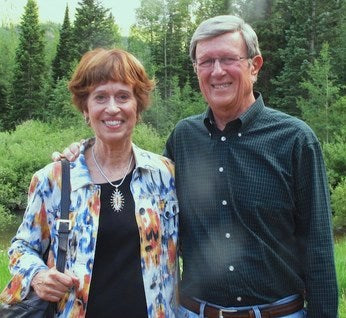
When my Aunt Myna called a family meeting in December 2014, she was already in a wheelchair. She calmly informed everyone that, when the time came, she would not want a feeding tube or ventilator to prolong her life.
Myna had been diagnosed with ALS just eighteen months earlier—and the disease was progressing fast. Her posture was slumped and her fingers were starting to curl. Myna had watched a close friend battle ALS decades earlier, so she knew what lie ahead.
ALS, also known as Lou Gehrig’s disease, has no cure. Life expectancy is 2-5 years
after diagnosis. Muscles throughout your body weaken until you can no longer move or
speak. Most people die from respiratory failure.
With the help of her brother (my dad), Myna wrote her own obituary. She wrote letters to
loved ones that would be delivered upon her death. My uncle was already struggling
with Parkinson’s, so they decided to sell their house and cabin and move into an
assisted living facility.
Once Myna had planned for the end of her life, she seemed more at peace. She stayed
engaged in the news of the day, always asked about others, and maintained her
irreverent sense of humor.
Six months after our family meeting, I took a day off of teaching and flew to Arizona to
visit. Myna could still speak, but only a few words at a time. After the sun went down,
her breathing grew shallow and she lost consciousness. Myna passed away that night,
loved ones at her side.

In the following months, my dad and I reflected on the entire experience. Despite strong
support from a local ALS organization, we were always scrambling to adjust to her
rapidly changing needs. Surely other families were struggling to figure out many of the
same things we had just learned.
When we heard that Myna’s Director of Care Services, Kim Hughes, was leaving her
position after 12 years, we approached her about creating a user-friendly website about
ALS. With Kim’s deep understanding of the disease and my background in writing, education, and content creation, maybe we could help other families facing similar challenges.
During a two-day meeting at my dad’s office, we discussed our approach, covered the
wall with sticky notes, and mapped out the website. After a year of planning, research,
and writing, we launched Your ALS Guide in 2017.
Our traffic doubled year after year until we became known as a trusted educational hub
for the ALS community. Today, we partner with top experts, organizations, and
institutions. ALS clinics around the country put our fliers in their new patient packets.
Your ALS Guide has over 200 webpages, 400 original videos, and comprehensive
guides like the Home and Daily Living Guide, which includes information about activities
of daily living like eating, bathing, and dressing.
Over the years, we’ve received touching feedback, such as this note from one
caregiver: “Your information has helped us enormously on my wife’s ALS journey.
Thank you so much for what you have done for all of us who suddenly found ourselves
in a world we knew nothing about.”
Every time Kim and I meet on the road for a conference, we toast to Aunt Myna. She
was an elementary school teacher, so I like to think she would be proud of the
educational resource we’ve created to help others.
By David Meissner
More Stories from Our Community
Read how one woman channels her experience with ALS into art and advocacy in Painting Hope, One Rock at a Time. And if you're a caregiver navigating this journey, our Caring with Love, Not Alone story may resonate.
Making Daily Life Easier
For families living with ALS, everyday tasks like getting dressed can become one of the biggest daily challenges. Adaptive clothing for adults with magnetic closures can help preserve independence and dignity during those moments. Learn more about what adaptive clothing is and how it supports people with limited mobility.




Leave a comment
This site is protected by hCaptcha and the hCaptcha Privacy Policy and Terms of Service apply.